Quick answer
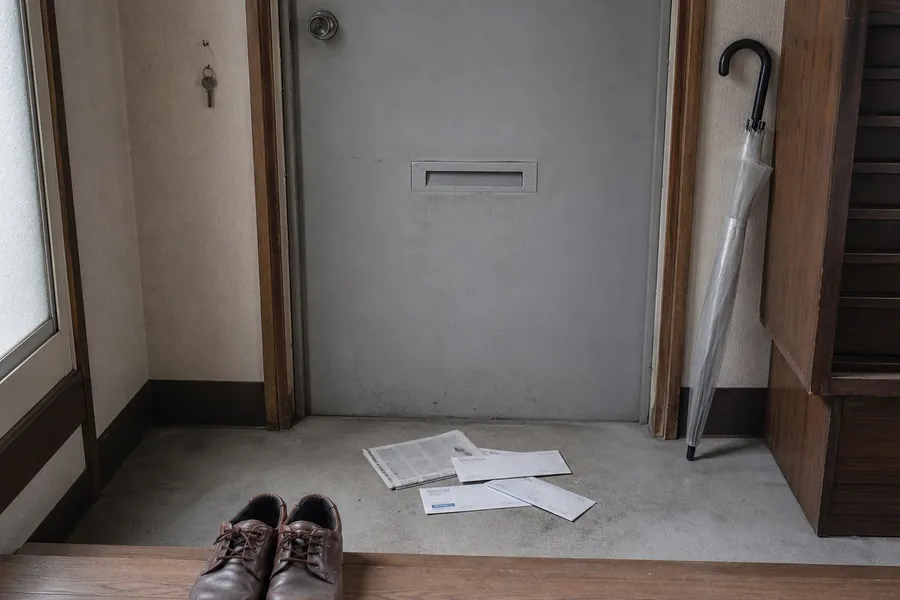
Japan’s government estimates that about 1.46 million people aged 15 to 64 (roughly one in fifty) are living as hikikomori, withdrawn from school, work and society for six months or longer. The number is this large because Japan assembled the conditions for it and then gave them time: an employment system with a single on-ramp at graduation, which the economic collapse of the 1990s closed for an entire generation; families with the means, and the shame, to absorb a child’s retreat in silence for decades; and a state that responded slowly, but that, unusually among nations, began to count. The picture in your head is a teenager in a darkened bedroom. The statistics describe someone else: when officials first surveyed the 40-to-64 bracket in 2018, it outnumbered the youth bracket they had been measuring for years. The main character of the hikikomori story you first read in the 2000s is still in his room, and he is approaching sixty.
One in fifty: what the number actually counts
Start with what the figure is. In November 2022, the Cabinet Office surveyed thirty thousand people nationwide; the results, published in 2023, found that 2.05 percent of respondents aged 15 to 39 and 2.02 percent of those aged 40 to 64 met the government’s definition of broad-sense hikikomori. Projected onto the population, that became the number the health ministry now uses in its own campaign materials: about 1.46 million people, one in fifty.
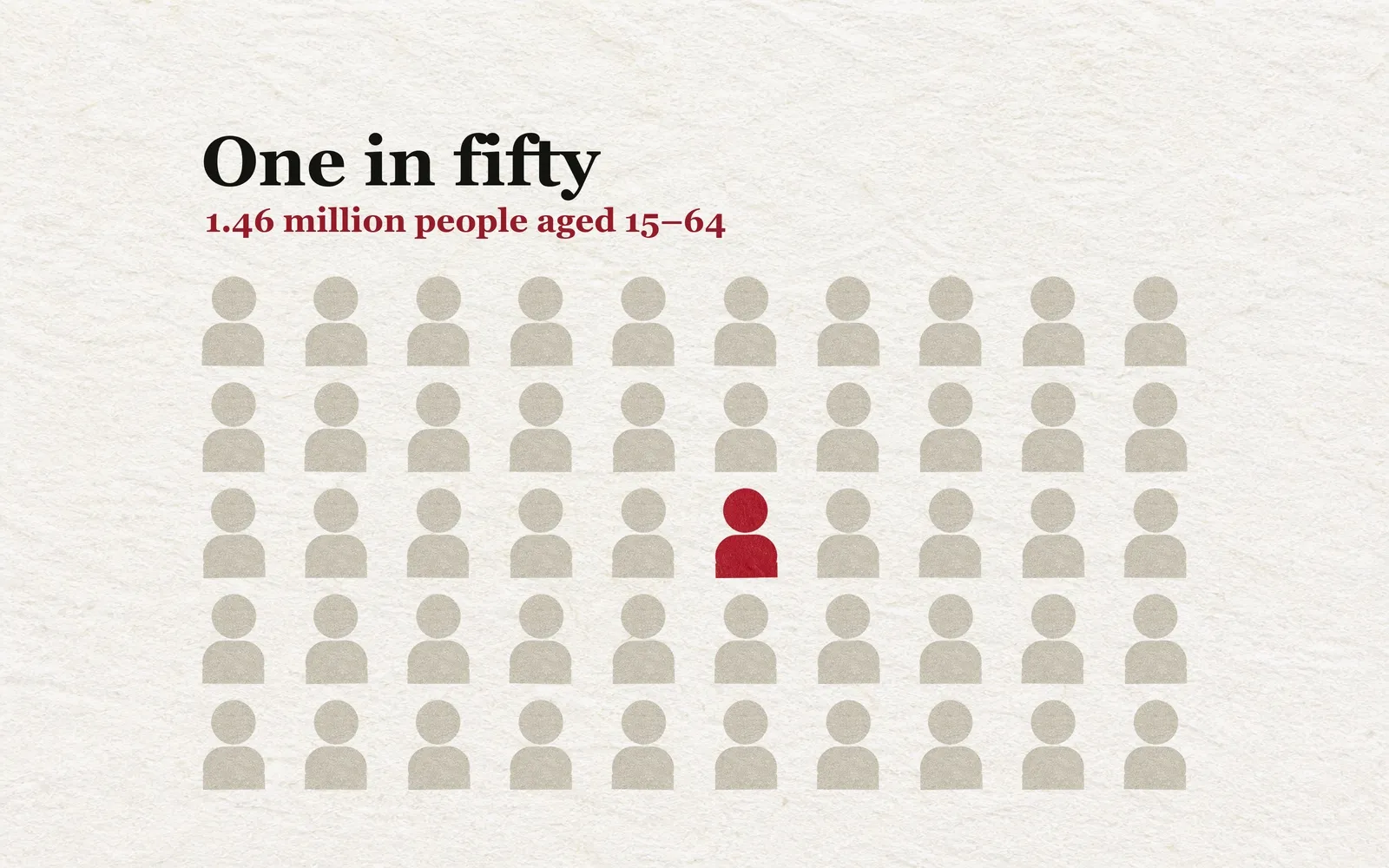
The definition, fixed in a health-ministry guideline in 2010, is precise in ways the headlines are not. It counts people who have avoided social participation (school, employment, contact beyond the household) and remained essentially at home for at least six months, while explicitly excluding those kept home by illness, pregnancy, childcare, housework or a job done from the house. It is defined as a state, not a diagnosis: a description of where a life currently stands, not of what a person is. And it is broader than the English word “shut-in” suggests. The count includes people who leave the house for hobby errands, a subgroup that makes up nearly half of the total. The purist image of someone who never leaves a single room is the smallest category of all: 0.06 percent of the younger sample.
Two more details from the 2022 survey resist the stereotype. Roughly one respondent in five in both age brackets (18.1 percent of the younger, 20.6 percent of the older) named the COVID-19 pandemic among the reasons their withdrawal began, a reminder that the population is still being replenished by fresh shocks. And the withdrawn are not overwhelmingly male: women were 45.1 percent of the younger hikikomori group and 40.6 percent of the older. Japan counts its shadows with unusual diligence. The police count yakuza membership man by man each year, and the Cabinet Office counts withdrawal by the household. The counting matters, because every correction to the stereotype above comes from it.
The state also counts the ones who go the other way. Japanese police took 82,563 missing person reports in 2024, and in a quarter of them the family could not say why the person had gone. Withdrawal and disappearance are the two ways an adult here drops out of view. One of them stays inside the household, and only the other one opens a file.
The word came out of the wreckage of the 1990s
Psychiatrists had seen the condition long before the public had a word for it, the research literature traces cases back to around the 1970s. The naming came in 1998, when the psychiatrist Tamaki Saito published Shakaiteki Hikikomori (“Social Withdrawal: Adolescence Without End”) and argued that the young men stalled in their parents’ homes were not suffering an individual illness so much as a pathology of the system around them: family, school and workplace interlocking to produce, and then conceal, the retreat.
The timing was not an accident. Japan’s employment machine has one main boarding point: the mass hiring of new graduates each spring. Board it, and the escalator carries you upward for decades; miss it, and there is no second door, mid-career hiring barely existed. In the years after the bubble economy collapsed, companies slashed exactly that entry hiring, and the cohort finishing school in those years (the government now calls it the employment ice age generation) job-hunted into a wall. The state’s own program documents today define the group plainly as those who sought work “in the harsh employment environment after the bubble’s collapse.” A society that offers one on-ramp and stigmatizes everyone who misses it should not be surprised when the people who missed it stop showing up. It is worth noticing what Japanese youth deviance did in the same years: the loud kind (the bosozoku motorcycle gangs that once roared through the eighties) dwindled, while the silent kind accumulated behind bedroom doors. A country can run out of rebels and still be producing exiles.
The state’s first institutional response, a 2001 health-ministry guideline, carried its assumption in the title itself: community health activities around hikikomori “mainly in their teens and twenties.” Youth camps followed, then youth job-support stations in 2006, then regional hikikomori support centers from 2009, a scaffolding built entirely around the idea that this was a phase young people needed help exiting. The first national estimate, in 2010, counted 696,000, and surveyed only ages 15 to 39, because the question “what if they are older?” had not yet been asked.
The family absorbs what the system drops
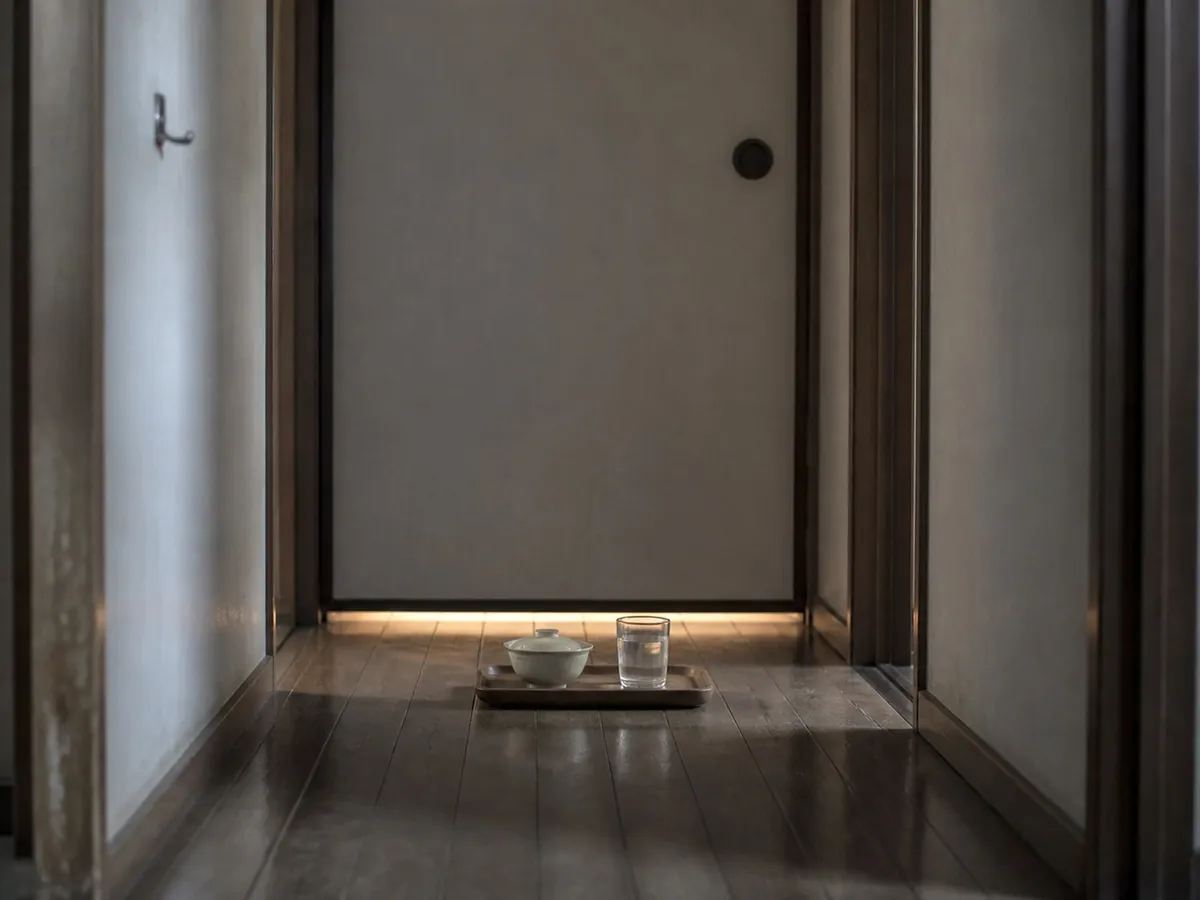
Why does a withdrawal last twenty years instead of two? Because in Japan the household can hold it. In the 2022 survey, 68.1 percent of the younger hikikomori group lived with their mother, 52.1 percent with their father, and 81.9 percent had never married. The family home is the de facto welfare system: it feeds, shelters and asks no questions outward, because the questions coming inward (what did you do wrong as parents?) are exactly what families fear. The KHJ federation, Japan’s national association of hikikomori families, put the mechanism bluntly in its 2019 statement: when media coverage demands to know why a family “left it untreated,” the blame does not push families toward help. It pushes them deeper into hiding.
That sealed market breeds predators. The same statement warns about so-called hikidashiya, “pull-out” contractors whom desperate families pay exorbitant sums to physically extract an adult child from the home, an industry the federation associates less with solutions than with trouble. The existence of such a trade tells you what the legitimate system was failing to offer: a door families could walk through without shame, at a price they could bear, before the situation aged into something harder.
And it does age. A household that absorbs a withdrawal in the parents’ fifties still holds it in their seventies. Nothing about the arrangement is stable except its silence.
The people who grew old indoors
In 2016 the government estimated 541,000 hikikomori aged 15 to 39. Two years later it finally asked about the older bracket (the first national survey of ages 40 to 64) and found 613,000: more than the young cohort that had defined the phenomenon for two decades. Japanese social policy already had a name waiting for what this implied: the 8050 problem: parents in their eighties supporting, on their pensions, children in their fifties who never left. The 2023 estimate confirmed the shape: withdrawal is now measurably a middle-aged condition, in a country where it is still narrated as a young one. A separate government count describes a population of similar age and sex at the far end of living alone: of the 21,856 isolated deaths Japan recorded in 2024, four in five were men and the largest single age band was 70 to 74. No official source links the two measurements, and they count different things.
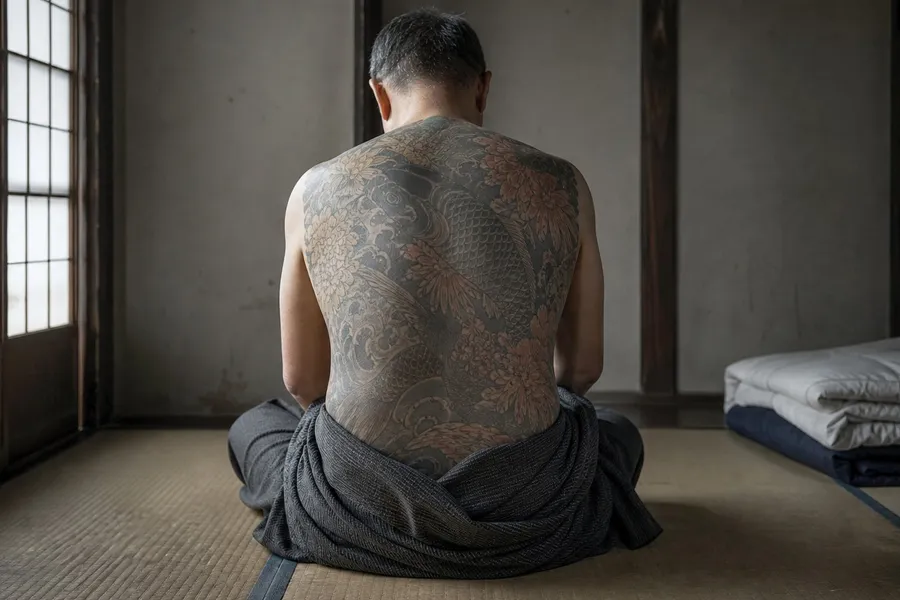
Then came the spring of 2019, when the word met violence. In late May, a deadly street attack in Kawasaki dominated national news, and coverage immediately attached the word hikikomori to the attacker; within days a second case, involving a former agriculture-ministry vice-minister and his adult son, kept the association on every front page. The KHJ federation’s response, published on June 1, is one of the more clear-eyed documents in this whole story. It grieved for the victims. It noted that people in withdrawal are overwhelmingly those who retreated to avoid hurting and being hurt, and that harm to strangers is extremely rare. It pointed out that in the Kawasaki case, according to press reports, the attacker’s own relatives had sought help from the municipal mental-health center fourteen times, and the system had not caught them. And it recorded what the panic did to ordinary families. The attack, it wrote, had struck households across Japan with the fear that their own child might be next; in the two weeks after coverage peaked, calls to the federation ran to about 220 (twenty to forty times the normal volume) most of them, by its own description, the anguished voices of isolated families connected to no support at all. An image detached from the people it describes, taught to a nation by repetition. We have traced that pattern before, written on skin. Here it was taught in a news cycle, and the families it described hid deeper.
Is Japan the only country with hikikomori?
No, and the research settling that question is largely Japanese. A Kyushu University–led group has proposed formal diagnostic criteria for future editions of the DSM and ICD, the two manuals that define psychiatric practice worldwide, precisely because hikikomori-like cases now appear in the clinical literature of many countries. The word itself travels untranslated, the way karoshi does: other languages needed the noun because they were starting to need the concept.
Where counting has been attempted, the results are easiest to read side by side:
| Where | Who was counted | Yardstick | Result |
|---|---|---|---|
| Japan (2022 survey) | Ages 15–64, nationwide | At home for 6+ months, broad definition | 2.05% of ages 15–39, 2.02% of ages 40–64 → 1.46 million people |
| Hong Kong (2015) | Ages 12–29 | Withdrawn for 6+ months | 1.9% |
| South Korea (2023) | Ages 19–39 | Isolated or reclusive, a wider net | About 5% → 540,000 people |
| Italy (2023) | Secondary-school students | Classifiable as hikikomori | 1.7%, plus 2.6% at risk |
The first thing the table shows is that Japan’s rate is not an outlier. Roughly two in a hundred turns up wherever a six-month yardstick has been applied: Hong Kong’s 1.9 percent sits beside Japan’s 2 percent, and Italy’s 1.7 percent of students is the same neighborhood again. South Korea’s larger share was measured with a broader definition (it counts the isolated as well as the housebound) and the researchers caution that people defined by their unreachability are, if anything, undercounted; a 2025 Italian study adds that the adolescents who never meet friends outside school have doubled in number since the pandemic. The caveat stands: each country measured a different age band with a different tool, so the table is a set of neighboring photographs, not a ranking. But it is enough to retire the idea that withdrawal is a Japanese eccentricity. The ingredients travel (competitive education, precarious youth labor markets, family homes able to absorb a stalled adult child) and so, evidently, does the condition.
The second thing is what the table cannot show: age and duration. Every other count stops at 29, at 39, or at the school gate; only Japan’s reaches 64, because only Japan has been watching long enough for the people it counts to grow old. What Japan still owns, in other words, is not the phenomenon but the file on it. No other government has produced anything like the series: 696,000 (2010), 541,000 (2016), 613,000 (2018), 1.46 million (2023, with the widened age range), four national counts across thirteen years, on top of the decades of clinical observation that named the condition in the first place. The honest answer to “why are there so many hikikomori in Japan?” begins here: partly because the conditions produce them, and partly because Japan has been looking longer, and harder, than anyone else.
What the state is doing about it
The scaffolding built for troubled youth has spent the last decade being rebuilt for a phenomenon with no age limit. The support centers that began at prefecture level in 2009 were pushed outward to municipalities from 2022, on the theory that a household twenty years into silence will not travel to a distant office. By fiscal 2023 there were dedicated centers in 32 municipalities and lighter-weight support stations in 93 more. A 2015 law on livelihood support gave welfare offices a mandate that does not require the person to be young, and a loneliness-and-isolation law that took effect in April 2024 made social disconnection itself a named object of national policy.
For the ice-age generation specifically, a 2019 program set the bluntest target in this file: create 300,000 additional regular-employment jobs for the cohort. The government’s 2026 follow-up program reports the result with unusual candor: regular employment up 110,000 and executive posts up 200,000 over five years: alongside 330,000 people still stuck in involuntary non-regular work, a reason the program was renewed rather than retired.
And the health ministry now runs a permanent public campaign, Hikikomori VOICE STATION, whose landing page opens by quoting the two sentences it most wants to kill: “So basically, laziness, right?” and “Isn’t it the parents’ coddling?” A government using its own website to argue with its own public’s prejudices is a late arrival, but it is aimed at the mechanism this article keeps returning to, because the prejudice is what keeps the doors shut.
A problem measured in decades
So: why does Japan have so many hikikomori? Because a rigid employment system manufactures exits it cannot reverse; because the family home absorbs the exiles invisibly, one spare room at a time; because shame keeps each household’s version of the story sealed until the parents are eighty; and because all of this has now run for thirty years, long enough for a condition named after adolescence to acquire gray hair. The 1.46 million are not a wave. They are an accumulation.
The uncomfortable corollary is that the number is high partly because Japan is honest enough to produce it. A phenomenon that other countries are only beginning to name has been surveyed here four times, argued over in guidelines, budgeted for, and advertised against on government websites. The counting has not solved it. But everything anyone knows about the real shape of the problem (the aging, the women, the pandemic’s fresh conscripts, the families dialing a hotline at forty times the normal rate) exists because somebody counted. The room stays quiet. The ledger, at least, no longer does.