Quick answer
Yubitsume (the ritual severing of finger joints) is the yakuza’s best-known custom in the English-speaking world, and almost everything popularly said about it stops at the image: a man, a blade, a severed little finger presented in apology. The documented story is stranger. The practice began not with samurai but with Edo-period gambling guilds, as a way of collecting debts in flesh. It survived because it made loyalty visible and exit expensive. And it is so established that Japanese law contains a statutory definition of it: a 1991 statute prohibits coercing it, soliciting it, or even handing a man the tools, and that legal definition names the two things a finger buys: forgiveness, or permission to leave. Today the ritual is fading with the organizations themselves. What remains is the mark, and for men trying to get out, the mark has become the obstacle.
What the ritual actually is
The mechanics are unceremonious. By the account of Yuichi Sakurai, a former Tokyo Metropolitan Police detective who spent his career in the department’s organized-crime units, the finger is placed on a surface and severed in one motion with a kitchen knife or a chisel struck with a hammer. The severed portion is presented to the person being apologized to. The pain is the point: a painless apology would prove nothing.
What the gesture means depends on whose failure it answers for. The academic literature records a distinction between two kinds of severed finger. A shini-yubi, a “dead finger,” atones for the man’s own offense: disobedience, a failure, a breach of the organization’s rules. An iki-yubi, a “living finger,” is offered to resolve a conflict for which the man is not personally responsible: a subordinate’s mistake, a dispute between groups that someone must absorb. The dead finger is an admission. The living finger is a demonstration: proof of loyalty expensive enough to be believed, offered up through a hierarchy that describes itself in the language of parent and child, oyabun and kobun.
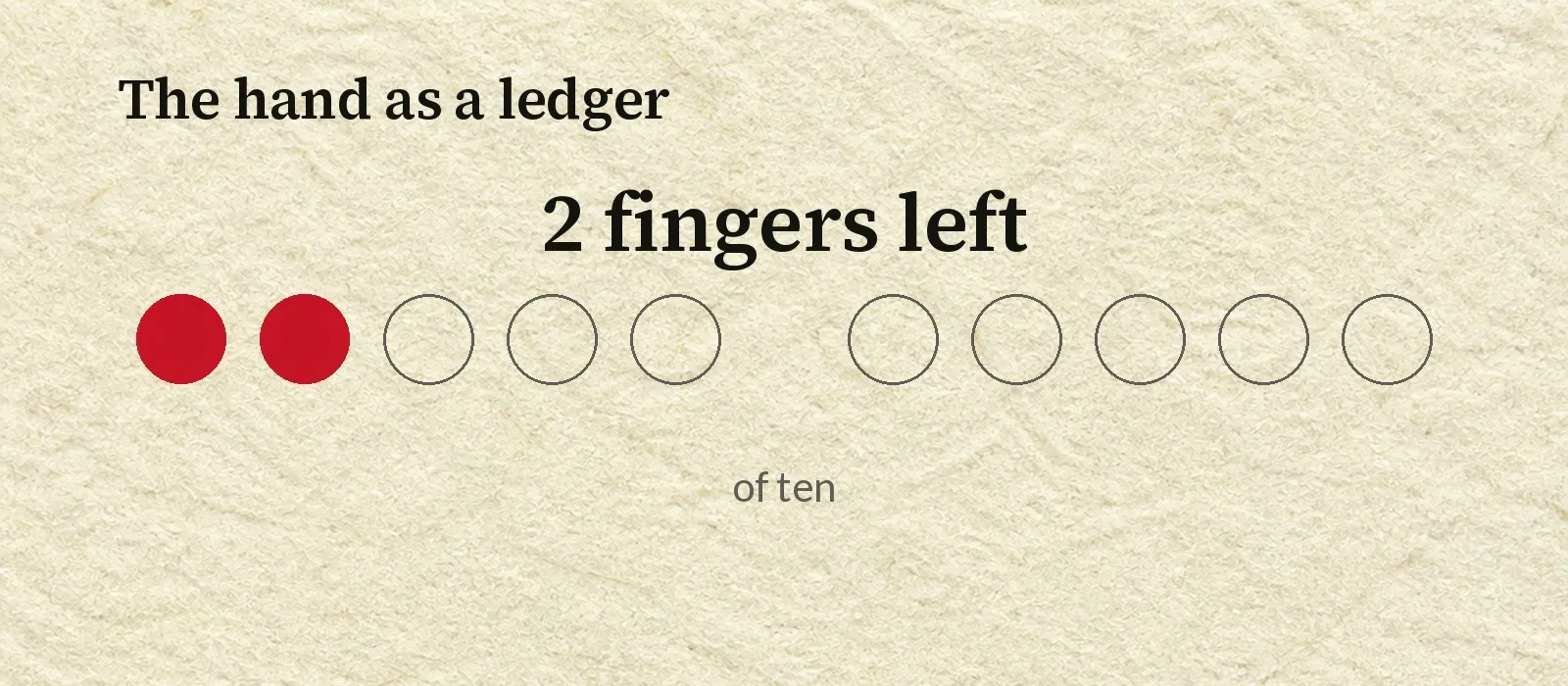
Because the ritual can repeat, it has a grammar. Sakurai’s account sets out the sequence: a man who has already given one little finger gives the other. After that, the ring finger at the second joint. After that, the middle finger. The hand becomes a ledger. Sakurai recalls one man from his own casework (Osamu Yano, head of the Sumiyoshi-kai-affiliated Yano Mutsumi-kai and later a death-row inmate), who had only two fingers left, a thumb and an index finger. Read against the sequence, a hand like that is a record of how many times its owner had answered for something, and a running count of how many answers he had left.
Where it came from — and where it did not
English-language accounts often reach for the samurai. The documented trail leads somewhere less romantic: to the bakuto, the itinerant gambling guilds of the Edo period from which one lineage of the modern yakuza descends, a history the organizations themselves are dying with.
In the account assembled by the academic literature, yubitsume began as a punishment for offenses too serious to ignore but not serious enough to warrant death or expulsion, and above all as a mechanism of debt: a gambler who could not pay was made to pay in the joint of a little finger. The severed finger did double work. It hurt, immediately; and it weakened the grip on a sword, permanently, which meant a man who had given a finger was measurably worse at defending himself, and correspondingly more dependent on his boss’s protection. The academic authors are explicit about the pragmatic value to yakuza leaders: the ritual manufactures dependence. Each apology binds the apologizer more tightly to the organization he apologized to.
That is the better-supported story. Whether every link in it can be proven (whether the sword-grip explanation is origin or later rationalization) the sources cannot establish, and we will not pretend otherwise. What the explanation gets right, provably, is the logic the ritual expressed for the next century: an injury that made submission visible and made the injured man easier to keep.
Japan wrote the ritual into its statute book
Here is the fact that most English-language treatments miss entirely: yubitsume appears in Japanese law, by name, with a definition.
The Anti-Boryokudan Act of 1991 (the same statute that created the designation system for crime syndicates, a mechanism this site has examined in detail) devotes three consecutive articles to the practice. Article 20 prohibits a designated gang member from coercing or soliciting another member’s yubitsume, or assisting it “by providing the implements used”, the drafters contemplated the toolkit. Article 21 extends the prohibition up the hierarchy, banning members from ordering subordinates to do the coercing, and from requesting, instigating or aiding it sideways. Article 22 gives public safety commissions the power to order the conduct stopped, and to issue preventive orders running up to a year against a member judged likely to repeat it. A law that took the trouble to ban delegating the coercion understood exactly how the organizations it regulated actually worked.
But the most revealing sentence is the definition itself. Article 20 defines yubitsume as severing all or part of one’s own fingers:
…as apology for an act contrary to the discipline of the organization to which the member belongs, or as the price for being permitted to withdraw from that organization, or in any similar spirit…
Read that second clause again. The statute (drafted by the state, in 1991) records as a matter of legal definition that fingers were the price of leaving. Not folklore, not a screenwriter’s flourish: the National Diet’s own description of how exit from these organizations was priced. Japan has a pattern of writing its underworld into precise legal language (it built an entire bespoke statute around one organization when the general law failed against Aum Shinrikyo) and the yubitsume articles belong to the same tradition: the state does not ban the organization, but it names the organization’s rituals, one by one, and regulates them.
When the ritual became coercion
The law’s drafters were not legislating against a hypothetical. The ritual’s own definition (cutting off one’s own fingers) describes a voluntary act, and the three articles exist precisely because the voluntariness could not be trusted.
Sakurai’s account includes the case that shows what enforcement looks like. In September 2013, he was a section chief in the Tokyo police organized-crime division when word came down: the boss of a small affiliate of the Kyokuto-kai, a Tokyo-based syndicate, had had his little finger forcibly torn off with nippers by a fellow member obsessed with the tradition. The severed finger was later found preserved in formalin in a refrigerator. The victim, a gang boss himself, was willing to file a complaint against his own organization. What began as an internal dispute over a finger became the opening of a coordinated police campaign against the Kyokuto-kai’s chairman, the kind of top-down enforcement operation Japanese police reserve for the organizations’ summits.
A ritual that requires a legal ban on coercion, and produces victims willing to testify against their own syndicate, is not the honor ceremony of the films. And it is fading with the world that sustained it. The National Police Agency counted 10,400 full members nationwide at the end of 2023, in a decline unbroken since 2005; the organizations are shrinking around the ritual, and the discipline hierarchies that once ran downward into the motorcycle gangs that served as their reserve force have thinned at every level. A custom whose entire function was to make membership legible (loyalty you could count on a hand) has less and less membership to make legible.
The finger that keeps the door shut
The statute’s definition said fingers were the price of being allowed to leave. The harder truth is what happens after a man has paid it.
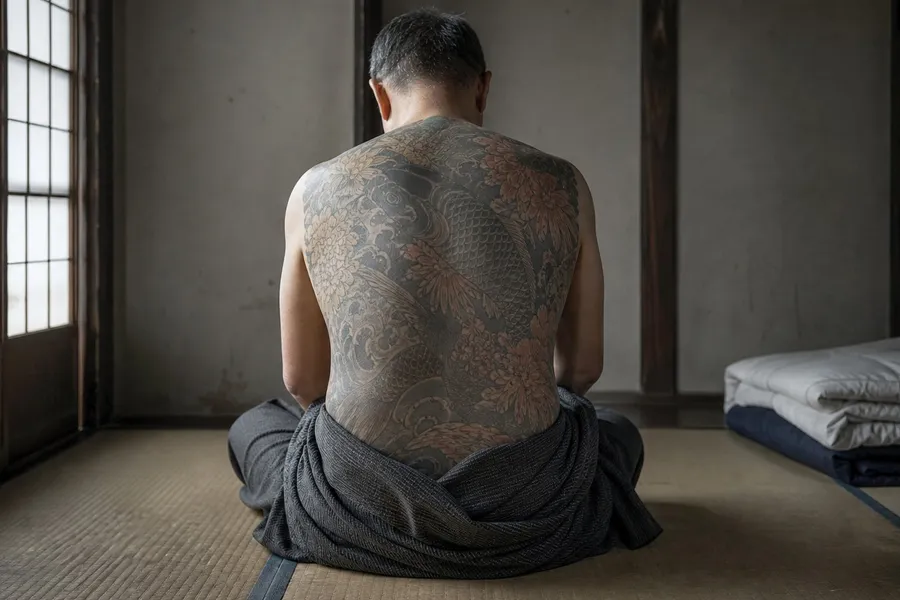
A missing little finger is the single most legible mark of yakuza history in Japan, more legible than a tattoo, because it cannot be covered by a shirt sleeve. It is visible in every handshake, every document signed across a counter, every tray of change. For a former member trying to rent an apartment, open a bank account or pass a job interview, the mark answers questions before they are asked, and answers them badly. We have documented how narrow the exit from these organizations already is: in 2023, a national support framework with more than 1,600 cooperating companies produced 26 job placements for former members, and eight bank accounts. A hand that announces the applicant’s past does not widen that opening.

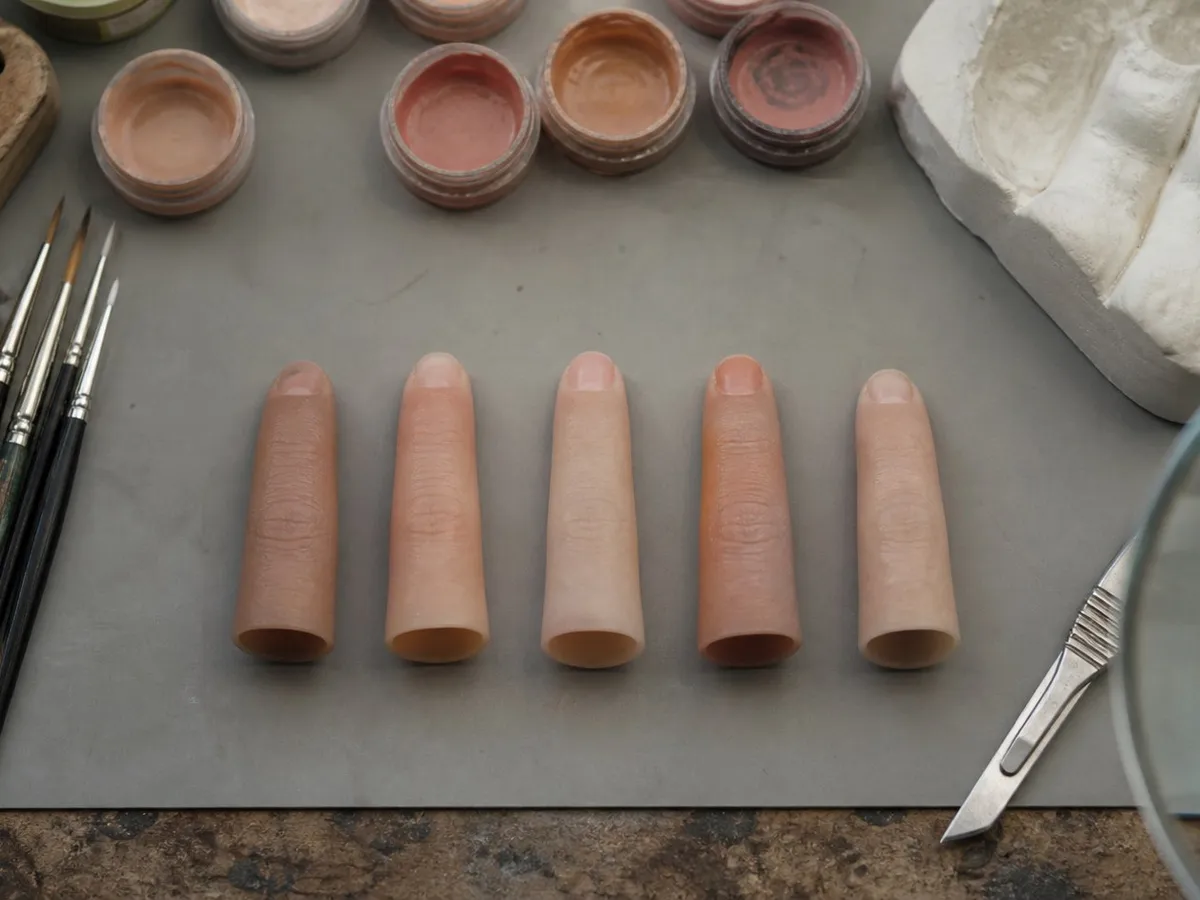
Which produced one of the stranger occupations in Japan: the prosthetic pinky. A prosthetics artisan in Osaka, Yukako Fukushima, has been making silicone little fingers for former gang members since the early 1990s (reportedly hundreds of them, matched to skin tone, built to survive a handshake) on the stated reasoning that a visibly complete hand is a foothold: it widens the chances of employment, of marriage, of an unremarkable life. Her work has been covered admiringly by overseas media, and the coverage usually treats it as an oddity. It is better read as a measurement. The existence of a decades-long practice of rebuilding fingers, for men who left, is the exact inverse of the ritual, and the most precise gauge available of what the ritual costs on the far side of the exit.
The mark that proved obedience inside the organization functions as a barrier outside it. That inversion is the modern meaning of yubitsume. A custom engineered to make men easier to keep now operates, decades later, to make them harder to release, which is to say it still performs its original function, on men who no longer belong to anything.
Why the ritual is bigger in English than in Japan
Yubitsume survives in the English-speaking imagination because it photographs well. It is visually dramatic, instantly legible, and it flatters the fiction that organized crime is governed by an austere code rather than by money, fear and hierarchy. The film versions keep the blade and lose the ledger.
The record assembled here suggests a different emphasis. The ritual’s documented origin is debt collection. Its documented function is dependence. Its modern legal existence is a statute banning people from forcing it on each other. Its most recent famous case is a finger torn off with nippers and kept in formalin. And its longest-running consequence is borne by men who left, measured out in silicone, one rebuilt pinky at a time.
A severed finger was never proof of honor. It was proof of what membership cost, paid in a currency the organization could always verify. The question worth asking about the yakuza is not why they cut off their fingers, but why the men who stopped being yakuza are still paying for it, and that question leads to the larger one this site keeps returning to: what happens to an organization Japan never banned, and to the people it will not quite release.