Category

Society

The pressures, exclusions, and demographic changes shaping everyday life.

Some of the pressures shaping life in Japan are not events and never become news. They surface in survey data, in ministry reports, and in households that go unrecorded for years. This section examines those conditions and how institutions have responded to them.

Editorial scope

What this section examines

01

Social pressure

How social pressure shapes everyday choices and relationships.

02

Exclusion

How exclusion affects people, families, and communities.

03

Demographic change

How demographic change alters the conditions of daily life.
Published investigations

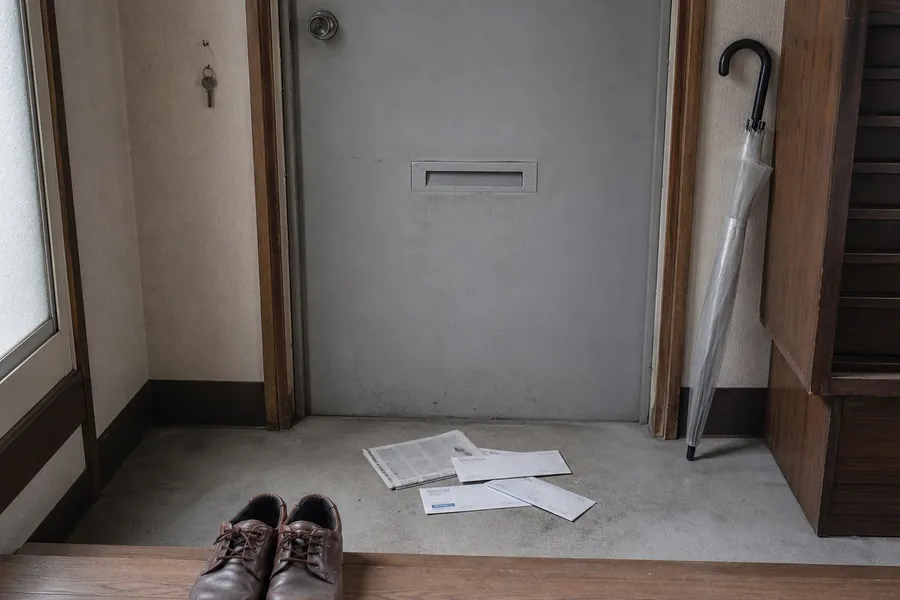
The inside of a small Japanese apartment entrance, photographed from within the room. A steel door with a letter slot stands closed. On the concrete floor of the sunken entrance below it lie a folded newspaper and several envelopes, left where they fell through the slot. A pair of men's worn leather shoes sits squared against the raised wooden step, toes pointing at the door. A clear plastic umbrella leans against the wall to the right. Weak daylight comes from a frosted window on the left. Nobody is present.

Society

How Many People Die Alone in Japan?

Japan's police counted 76,020 people who died alone at home in 2024. The Cabinet Office then defined the word for the first time and put the figure at 21,856. Four in five were men, and the largest single group was aged 70 to 74.
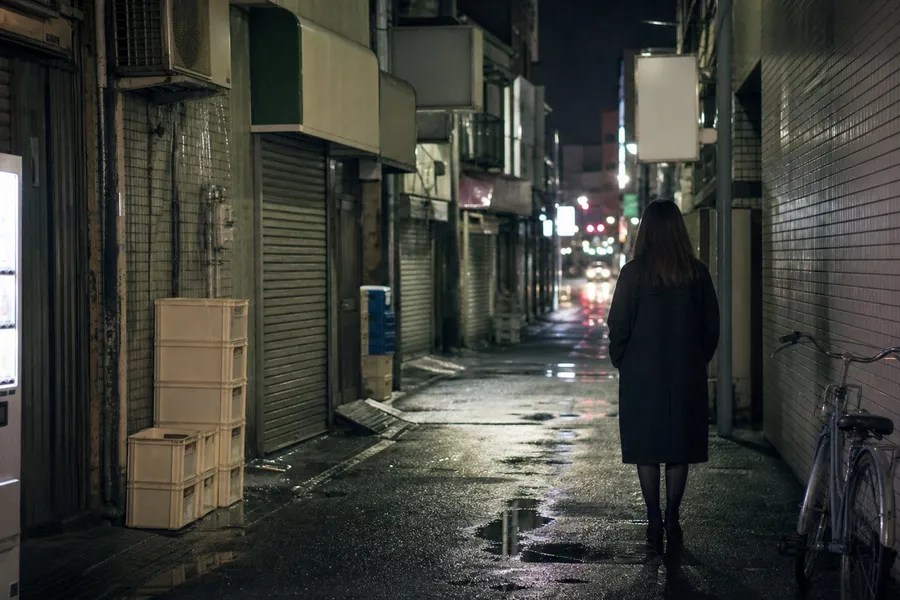
A photograph looking down a narrow back street in a Japanese entertainment district long after midnight. One woman in a plain dark coat stands alone against a tiled wall, seen entirely from behind with no face visible. Shuttered doorways, stacked plastic crates, an air-conditioning unit and a vending machine casting cold light line the alley, and unlit blank signboards project from the walls above. The wet asphalt holds puddles, a bicycle leans against the tiles, and coloured light from the main street glows out of focus at the far end. AI-generated photo illustration; not a photograph of any real street, business or person.

Society

Is Prostitution Legal in Japan?

Japanese law forbids prostitution in one sentence and attaches no penalty to it. What the statute defines, who it punishes, and the half of the law deleted in 2024, from Japanese primary sources.
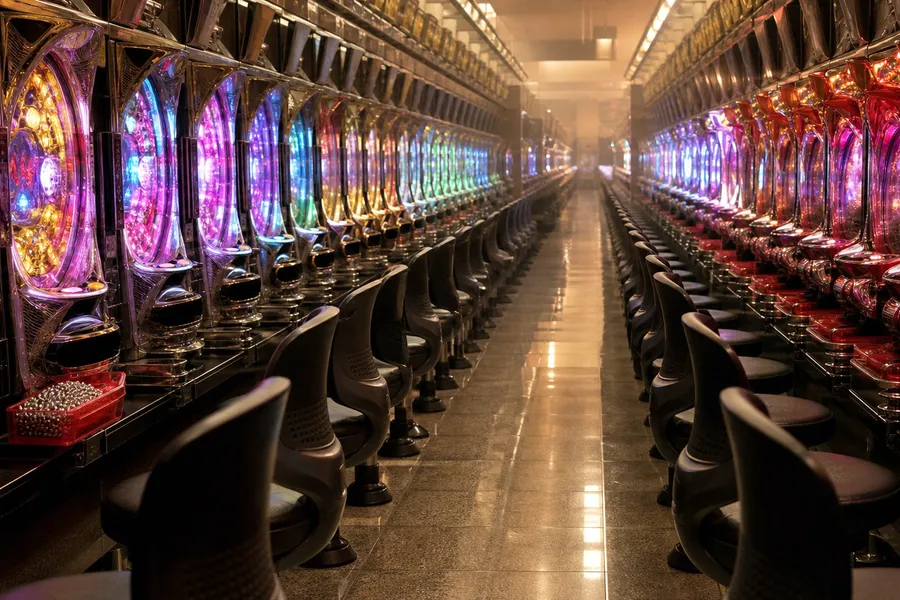
A photograph looking down a long aisle between two facing banks of pachinko machines in an empty parlour. The machine panels glow in saturated reds, purples and blues, their chrome trays and handles catching the light, and the polished floor reflects the colour back. Every seat in the aisle is empty and a single small tray of steel balls sits abandoned on one shelf. The far end of the aisle falls away into haze. No people are present. AI-generated photo illustration; not a photograph of any real parlour.

Society

Why Is Pachinko Legal in Japan?

No statute exempts pachinko from Japanese gambling law. The act that licenses it calls the games speculative, caps the payouts, and never explains the cash, traced through Japanese primary sources.
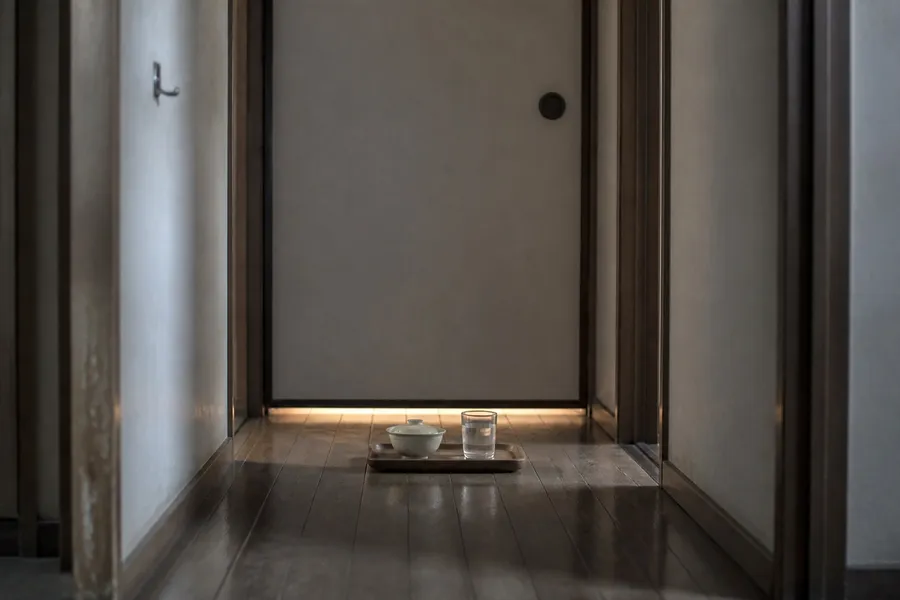
A photograph looking down a dim domestic hallway in an ordinary Japanese home. At the end of the hallway a plain sliding door is closed, with a thin line of light showing along its lower edge. On the floor immediately outside the door sits a small wooden tray holding a covered bowl and a glass of water, placed and untouched. The hallway is bare: a worn wooden floor, plain walls, a coat hook with nothing on it. No people are present. AI-generated photo illustration; not a photograph of any real home.

Society

Why Are There So Many Hikikomori in Japan?

Japan estimates 1.46 million people aged 15 to 64 (one in fifty) live in social withdrawal, and the middle-aged now outnumber the young. How a condition named for teenagers grew old indoors.
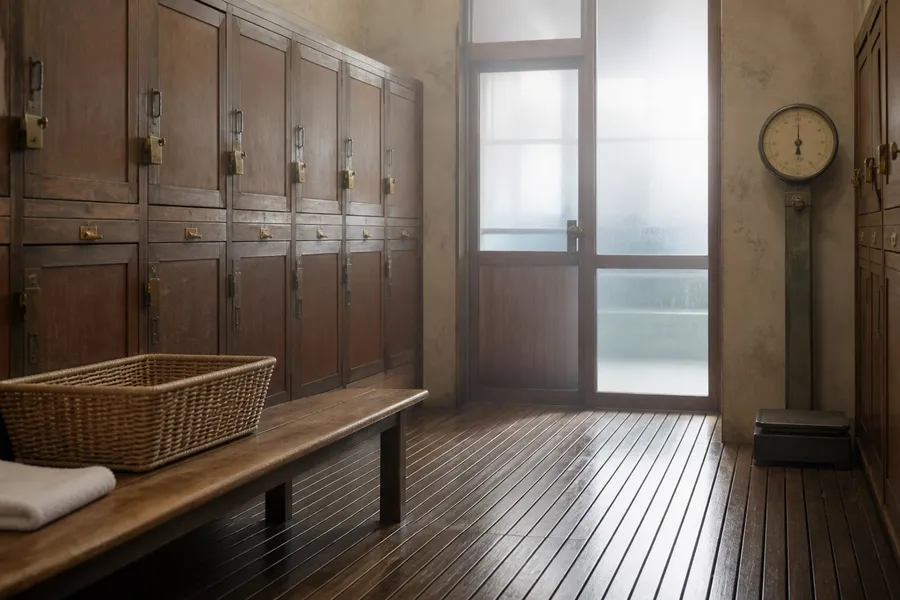
A photograph of the empty changing room of an old public bathhouse. Rows of wooden locker doors with worn brass fittings line the walls, a woven rattan basket sits on a low bench beside a folded white towel, and a tall analogue scale stands in the corner. A slatted wooden floor leads to a frosted glass door at the far end, through which pale light comes. The room is deserted. AI-generated photo illustration; not a photograph of any real bathhouse.

Society

Why Does Japan Still Treat Tattoos as a Warning Sign?

No Japanese law bans tattooed customers from hot springs. What operates instead is a 150-year chain: a punishment the state once inked on criminals, a syndicate that adopted the mark, and a film industry that mass-produced the image.

Explore other research areas