Quick answer
In August 2015 (its hundredth year) the Yamaguchi-gumi, the largest crime syndicate in Japan, broke in two. Thirteen of its direct-affiliate bosses walked out and founded a rival that took the same name with the city attached: the Kobe Yamaguchi-gumi. The war that followed ran for a decade, produced more than 100 incidents across the country, and called into existence the harshest police designation Japanese law can place on an organization. In April 2025 the Rokudaime (sixth-generation) Yamaguchi-gumi delivered a written pledge to Hyogo police declaring the conflict over. Here is the detail that carries this article: the law did not accept the surrender. The specified-conflict designation was extended for the 26th time in June 2026, because under the statute a war ends when the public safety commission says the danger has passed, not when the winning side announces it. To understand why the split happened, and why its ending is not the syndicate’s to declare, you have to start a century back, at the Kobe docks.
A century before the split
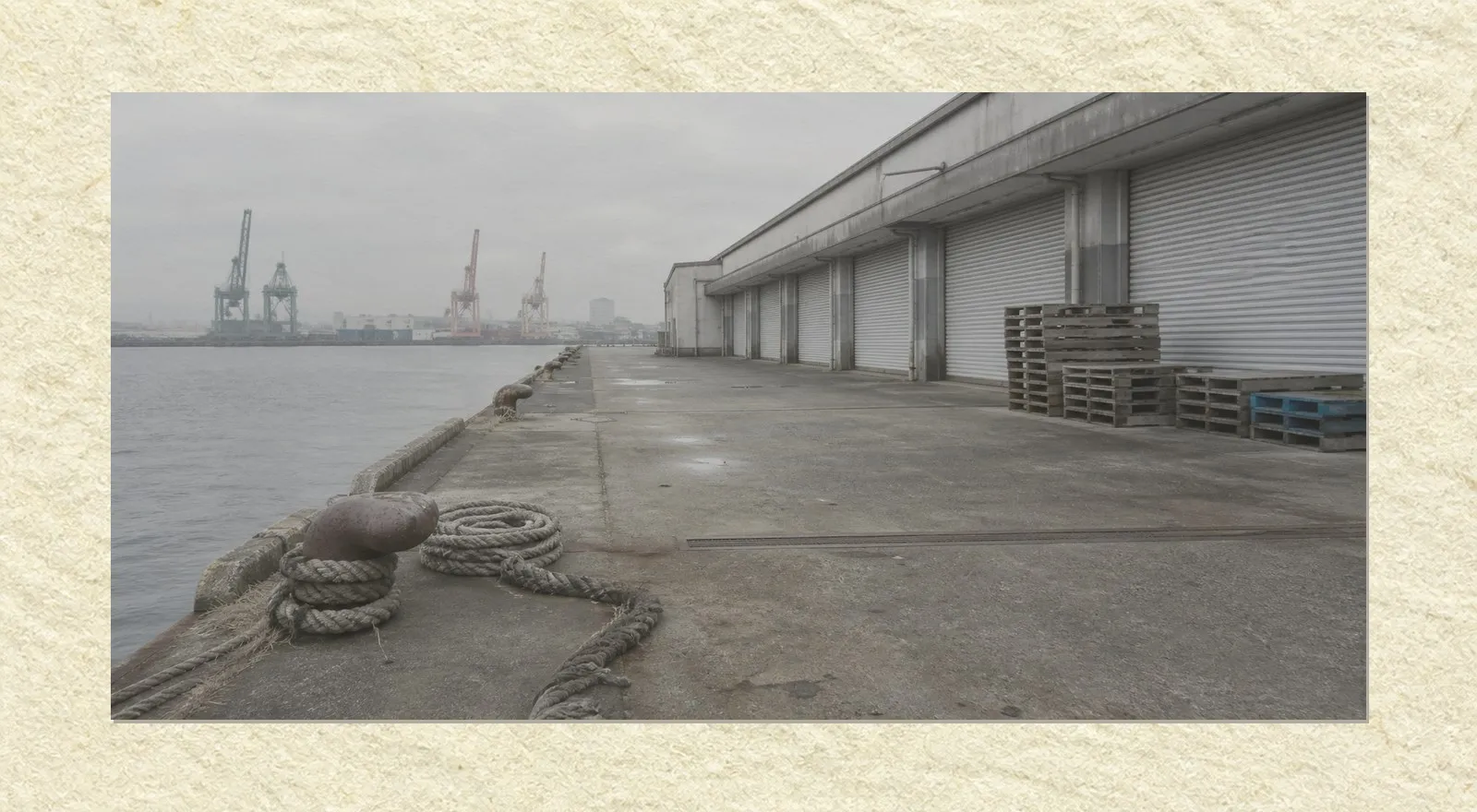
The Yamaguchi-gumi was founded in 1915 (the centenary that framed the split was reported across Japanese media) and it began, by the standard historical accounts, among the longshoremen of Kobe harbor: a labor-broking operation on the docks of what was then one of Asia’s great ports. What turned a local harbor outfit into a national syndicate was its third boss, Kazuo Taoka, who ran the organization from 1946 until his death in 1981. Taoka’s expansion strategy had a distinctive feature: legitimate fronts run at industrial scale. He operated a stevedoring company and, in the 1950s, a talent agency (Kobe Geinosha) that promoted some of the biggest entertainers of postwar Japan. The muscle expanded nationally behind businesses the public could see and enjoy.
Taoka’s death set off the succession crisis that previews everything about 2015. His designated line of succession collapsed into factions; the militant Masahisa Takenaka was installed as fourth boss over the objections of a senior rival, Hiroshi Yamamoto, whose faction walked out and founded the Ichiwa-kai. On 26 January 1985, gunmen of the Yamamoto faction shot Takenaka dead. What followed (the Yama-Ichi War of 1984 to 1989) remains the worst gang conflict in Japanese history: 317 incidents and 25 dead, by the count carried in later Japanese reporting, fought in streets and public places with bystanders in the line of fire.
Two legacies came out of that war. Inside the underworld, a doctrine later reporting summarized as “do not kill the top”, the assassination had made the war unendable for years. And outside it, public fury at gunfire in daily life became part of the pressure that produced the Anti-Boryokudan Act of 1991, the statute that does not ban these organizations but designates and regulates them, and that would be waiting, with amendments, when the next great split came.
The 2015 split
At the end of August 2015, thirteen direct-affiliate bosses left the Rokudaime Yamaguchi-gumi and founded the Kobe Yamaguchi-gumi under Kunio Inoue, the fact is recorded in the National Police Agency’s own white paper. The reported grievances have a familiar shape: under the sixth-generation boss Shinobu Tsukasa (legal name Kenichi Shinoda), his home faction, the Nagoya-based Kodo-kai, was seen by the departing bosses as dominating appointments and money at everyone else’s expense. A century after the founding, the organization split along the same seam as in 1984: not ideology, but who controls the center.
The state’s machinery engaged in stages, and the dates matter. In March 2016, the NPA formally judged the two organizations to be in a state of conflict. In April 2016, the Hyogo Public Safety Commission designated the Kobe Yamaguchi-gumi as a designated boryokudan in its own right. The breakaway was now inside the same regulatory system as its parent. In April 2017 the rebellion had its own rebellion, when part of the Kobe organization broke away again (the faction now known as the Kizuna-kai). One split became three organizations, every one of them designated.
The war
By May 2017 (barely 14 months after the formal conflict judgment) police counted 48 unlawful incidents attributable to the conflict, across 19 prefectures: six shootings, three firebombings, ten vehicle rammings of offices and related facilities. The ramming detail deserves a pause: driving dump trucks into buildings became a signature of this war, violence engineered to demolish property and demonstrate reach.
It did not stay aimed at property. In 2019, a Kobe Yamaguchi-gumi-affiliated boss walking with a woman through a Kobe shopping street was stabbed and seriously wounded by a member of the rival side; four months later a Yamaguchi-gumi-affiliated member was shot in the torso by a man on a mini-motorbike and left in critical condition. By the end of 2024 the cumulative count of conflict incidents between the two main organizations exceeded 100. This was not the Yama-Ichi War (the body count never approached 1985), but it was a decade of gunfire, blades and truck engines in the streets of ordinary cities.
The law that was waiting for it
In January 2020, the Hyogo Public Safety Commission reached for the statute’s severest instrument and designated both organizations specified-conflict designated boryokudan: a category written into the Anti-Boryokudan Act for exactly this situation, the same statute whose designation mechanics we examined in the hub article, and the same one that regulates the underworld ritual by ritual, down to naming yubitsume in its text.
The mechanism, from the statute itself, works like this. Under Article 15-2, when designated organizations are in a conflict involving weapons that gravely endanger life, the commission designates them for renewable three-month terms and (this is the distinctive part) draws warning zones on the map: municipalities where the danger requires special vigilance. Inside a warning zone, Article 15-3 makes it illegal for a member to open a new office, to tail or loiter near rivals, to gather in groups (roughly five or more, in the reported application), or (the remarkable clause) to enter or remain in the organization’s own offices at all, with an exception only for measures to close the office down. The law empties the gang’s own buildings.
The teeth are in Article 46: violating these prohibitions carries up to three years of imprisonment or a fine of up to five million yen, directly, no preliminary cease-and-desist order, which is what makes arrest immediate. A former Yamaguchi-gumi-affiliated boss described the practical result to Kansai TV: offices unusable, limits on how many men could even walk together, groups barred from entering restaurants.
And the designations stacked. The conflict with the Ikeda-gumi, another ex-Kobe faction, brought its own designation in 2022, extended for a tenth time in June 2025. The conflict with the Kizuna-kai brought a designation reported in June 2024, still being extended in 2026. By the middle of the decade, the map around the Yamaguchi-gumi was layered with overlapping warning zones, each renewing every three months.
What the split did to everyone else
The user-facing question about any gang war is what it costs the people who never joined anything. The answer here has two layers.
The first is the direct one: the incidents happened in public. A man stabbed in a shopping street in Kobe. A shooting in a residential street in 2016 that killed a Kobe-affiliated boss. Schools, storefronts and apartment blocks stood next to buildings that dump trucks were aimed at.
The second layer is the more consequential one: the war handed citizens and municipalities the legal leverage to remove the organizations from their neighborhoods, and the police white paper records them using it. In Fukuoka in 2016, after a firebomb was thrown into a Yamaguchi-gumi-affiliated office, a certified anti-violence center (acting in its own name on behalf of local residents, a mechanism designed so that no individual resident has to stand up in court against a syndicate) petitioned for and won a provisional injunction banning use of the office. It was the first injunction of its kind in Japan, and the organization demolished the office within months. In Mito the same year, after a vehicle ramming and a shooting at a local office, the city itself (as the operator of a nearby elementary school) filed for an injunction alongside police, the prefectural anti-violence center and the bar association; the case settled with the office removed. The pattern generalizes: every incident made the next injunction easier, every designation made the organizations more visible and less tenable as neighbors. The split did not only consume the syndicate’s members; it armed everyone around them.
The surrender letter
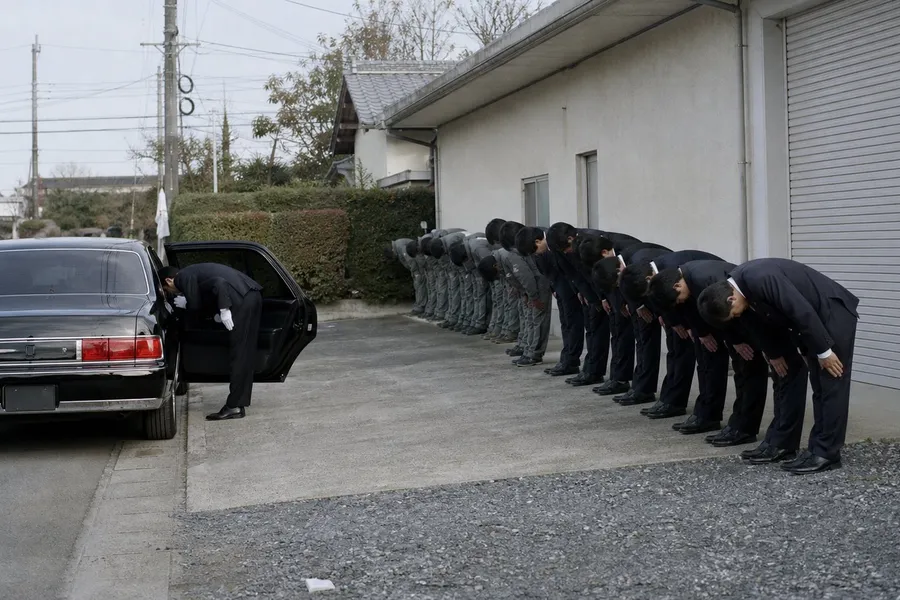
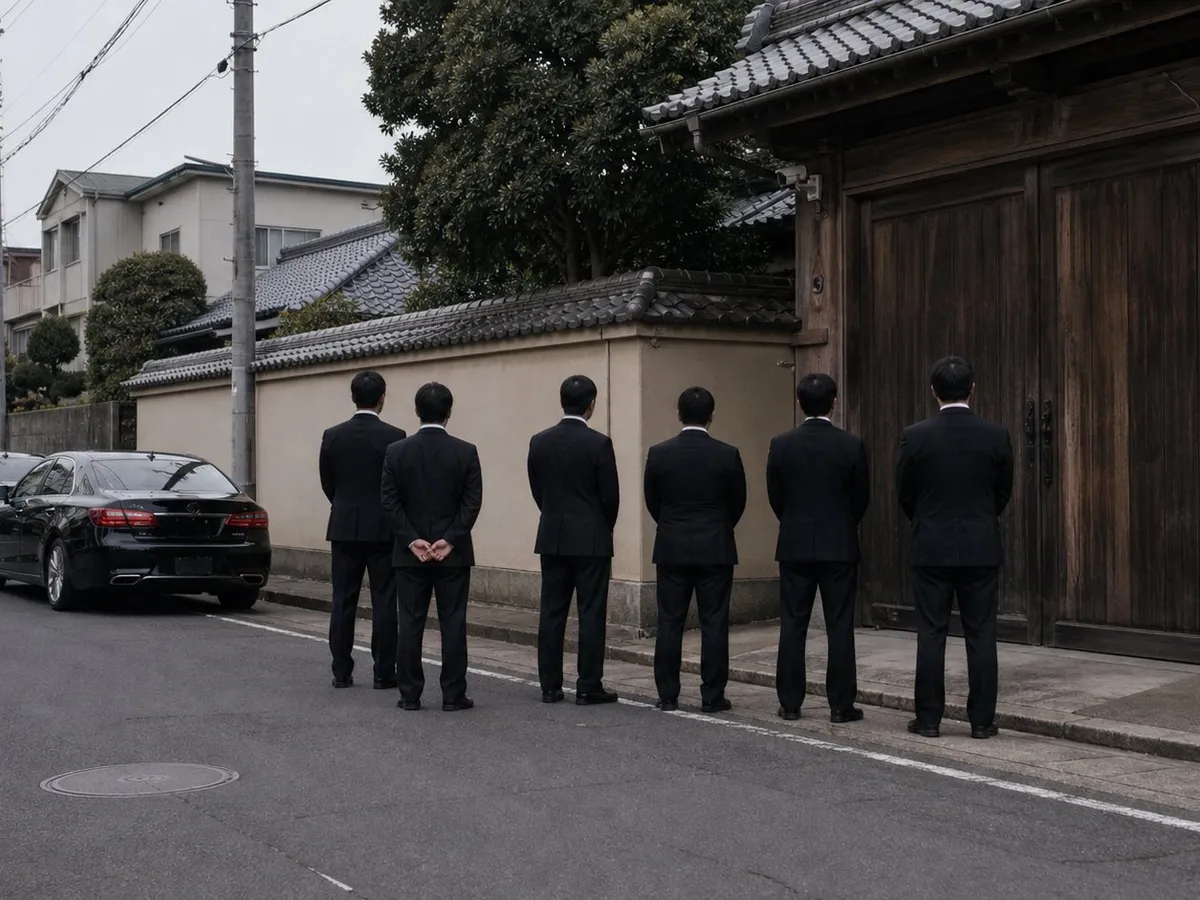
On 7 April 2025, men in suits arrived at Hyogo Prefectural Police headquarters. They were executives of the Rokudaime Yamaguchi-gumi, and they had asked, days earlier, to submit a document. Its reported substance: the Yamaguchi-gumi has decided to end the conflict, and will cause no further trouble.
Why then? The organization’s own commemorative publication for its 110th year, obtained by Kansai TV, gestures at the answer. It speaks of authorities tightening the screws year by year, of restrictions too numerous to count, of seeking a way forward suited to the times. The blunter version came from the numbers and from the organization’s own alumni. At the end of 2024 the NPA counted the Rokudaime Yamaguchi-gumi at about 6,900 members and quasi-members. The Kobe Yamaguchi-gumi stood at about 320: down from roughly 6,100 around the split, a collapse of about 95 percent. A former affiliated boss told Kansai TV there was nothing left to attack; a former member of both organizations said the rival was “not so much weakened as a name and nothing else.” The journalist Tomohiko Suzuki, asked to score the war, declined to name a winner: in a gang war, the winner is the side that grew, and neither side grew. Days after the pledge was delivered, affiliated bosses were summoned to a meeting in Toyohashi where, by one account, an executive announced the line for the years ahead: leave Kobe alone, the Rokudaime Yamaguchi-gumi moves forward, and only forward.
The war the law refuses to end
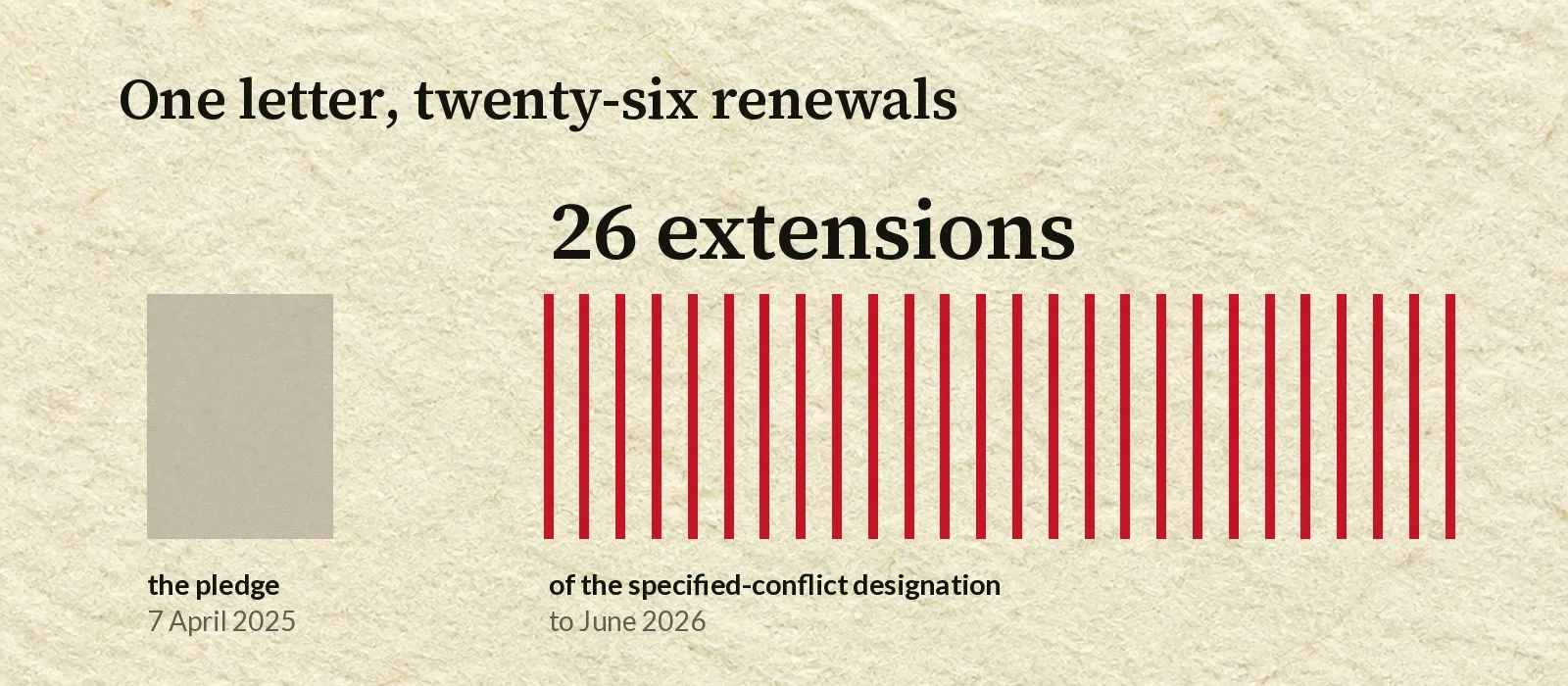
Sixteen months after the surrender letter, in June 2026, the Hyogo Public Safety Commission extended the specified-conflict designation of the Yamaguchi-gumi and the Kobe Yamaguchi-gumi for the 26th time. The parallel designation over the Ikeda-gumi conflict was still being renewed. The Kizuna-kai designation was still in force.
Both organizations, meanwhile, remain on the national register of designated groups, each with its own gazetted head office and representative, the breakaway now among the smallest entries on it.
This is not bureaucratic inertia; it is the statute working as written. Article 15-4 obliges the commission to revoke the designation when (and only when) it judges that the danger of further grave harm has passed. A pledge is evidence; it is not the test. An organization that spent a decade demonstrating what its members do with dump trucks and handguns does not get to close the file by handing over a letter. Japan never banned the Yamaguchi-gumi. But it also does not let the Yamaguchi-gumi decide when its wars are over. The designation system (the same legal technique that measures organizations instead of outlawing them) turns out to control the exit from a war just as it controls everything else: on the state’s timetable, by the state’s definition.
And the deepest reading of the split runs through the national numbers. Total yakuza strength has fallen every year since 2005 and stood at a record-low 18,800 at the end of 2024: a decline that had been running for a decade before the split and simply continued through it, thinning every layer of the pyramid, down to the motorcycle gangs that once fed it. The 2015 split did not break a healthy organization; a shrinking organization broke along the seam of who would control what remained, exactly as it had in 1984. The difference is what was waiting this time: a statute with a designation for wars, warning zones, direct arrest powers, and a clause that says the fighting is over when Japan says it is.