Quick answer
- Japanese law has no category called “cult.” Soka Gakkai is a religious corporation registered under the Religious Corporations Act. There is no government list of cults, and none was created even after the 1995 Tokyo subway sarin attack.
- The most common Western assumption is legally wrong. Article 20 of Japan’s Constitution says no religious organization shall “exercise any political authority”, but constitutional scholars read “political authority” as governmental power. A religious body backing a political party is not what the clause prohibits. Komeito is legal.
- The real controversy is a promise, not a statute. In 1970 Soka Gakkai’s leadership publicly apologized for interfering with a critical book and pledged institutional separation from Komeito. Everything argued since is measured against that promise. Komeito governed in coalition for 26 years and left it in October 2025.
“Cult” is not a legal category in Japan
English-language discussion of Soka Gakkai usually begins with the word cult. Japanese law does not.
Religious organizations in Japan register under the Religious Corporations Act, which grants legal personhood and the tax treatment that follows. The statute contains no definition of a cult, no list of dangerous groups, and no mechanism for designating one. This is not an oversight that Japan later corrected. Aum Shinrikyo released sarin on the Tokyo subway in 1995, killing commuters in a coordinated chemical attack, and Japan still did not write “cult” into law.
What Japanese law does have is narrower and much more consequential: a court can order a religious corporation dissolved. Article 81 of the Religious Corporations Act permits dissolution where an organization has committed acts that violate laws and regulations and are clearly recognized as substantially harming public welfare.
That provision is not theoretical. In a decision dated 22 June 2026, reported the following day, Japan’s Supreme Court let stand a dissolution order against the Family Federation for World Peace and Unification, the organization long known as the Unification Church. The court rejected the organization’s final appeal and held that dissolution did not violate the constitutional protection of religious freedom. When the government asked the courts to dissolve it in October 2023, it documented donation-related harm affecting roughly 1,550 people and totaling about ¥20.4 billion, of which ¥2.2 billion had been awarded to 169 people across 32 civil judgments. The provision had been used before. Its first application was against Aum Shinrikyo, after the 1995 sarin attack.
This matters for the question at hand, because it shows what Japan actually regulates. The test is not doctrine, intensity of belief, or unpopularity. It is documented unlawful conduct causing substantial harm. Soka Gakkai has never been subject to a dissolution order.
So if “is Soka Gakkai a cult?” means “has the Japanese state designated it as dangerous?”, the answer is no, because Japan has no such designation, and the one instrument it does have has never been applied to Soka Gakkai.
That leaves the question people are actually asking, which is about power, pressure, and politics. Those deserve separate examination.
What Soka Gakkai actually is
Soka Gakkai began in 1930 as Soka Kyoiku Gakkai, a society of educators interested in a value-creating pedagogy, rooted in the Nichiren tradition of Japanese Buddhism. Wartime suppression effectively destroyed it; its first president died in detention. The organization was rebuilt after Japan’s defeat in the Second World War and grew with extraordinary speed through the following decades.
That timing explains a great deal. In the decades following its defeat in the Second World War, Japan moved enormous numbers of people from rural communities into industrial cities, stripping them of the village and temple networks that had organized their social lives. Soka Gakkai offered arrival: a neighborhood group that expected you at meetings, noticed your absence, and gave you a role.
By its own account the organization has 8.27 million member households in Japan and approximately 3 million members outside Japan, figures it published as of November 2023. These are self-reported. It is worth noting that the 8.27 million figure has reportedly remained unchanged for many years, and no independent audit of membership exists. Japanese religious statistics generally should be handled with care. Reported adherent totals across all faiths substantially exceed the population, because organizations count differently and individuals are counted more than once.
Daisaku Ikeda, who became third president in 1960 and later honorary president, died on the night of 15 November 2023 at the age of 95, of old age. He had been the defining figure of the movement for over six decades.
Two details about that death are worth stating precisely, because they say something about how the organization handles its own center of gravity.
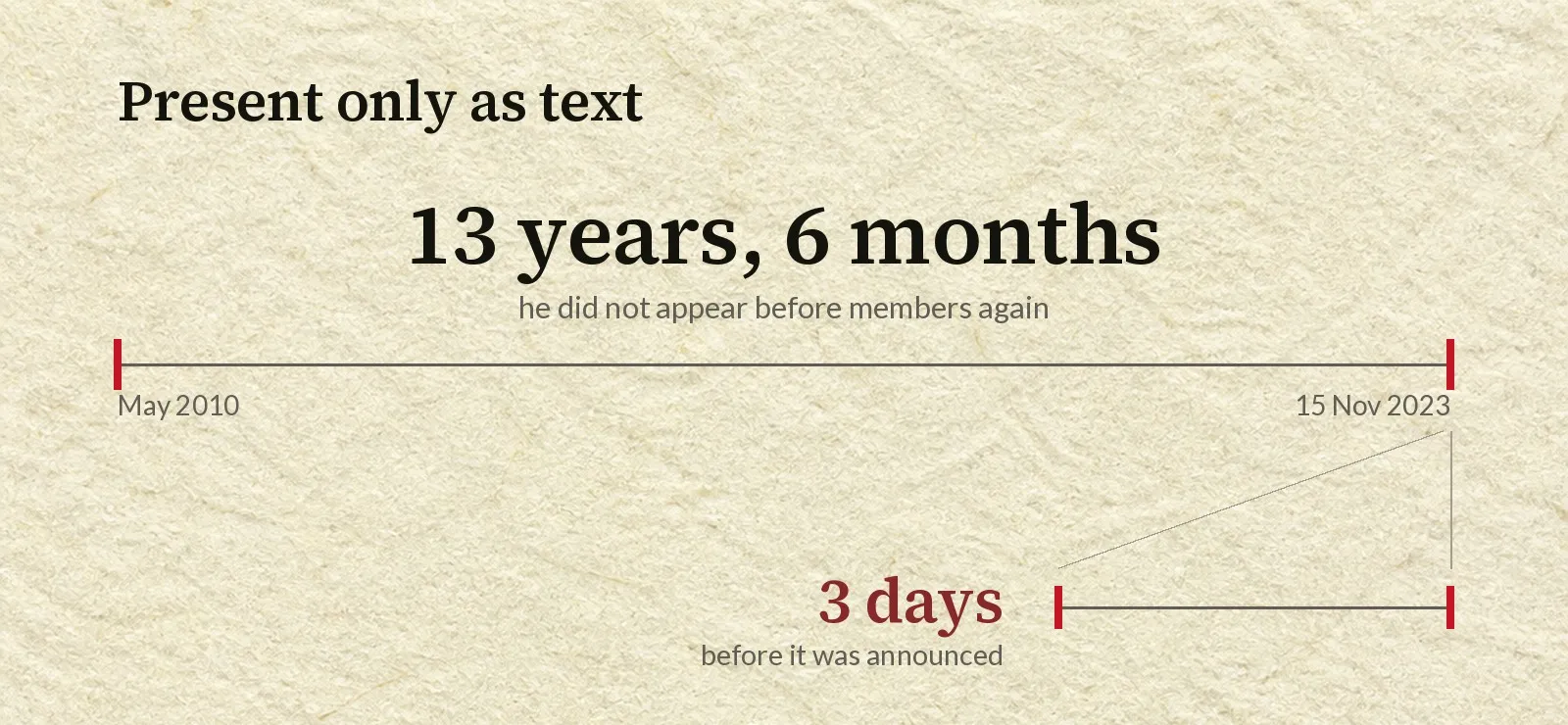
The first is that Ikeda had already been absent for thirteen years. His last appearance at a headquarters leaders meeting was in May 2010. From the following month he sent written messages instead of appearing, and he did not stand before members again. For over a decade the most important figure in the organization was present only as text, a situation that generated persistent speculation in the Japanese press about his condition and about who was actually deciding things.
The second is that his death was not announced immediately. He died on the night of 15 November 2023; the organization announced it on 18 November, three days later. His funeral had already been held privately, among close family. For an organization that reports millions of member households, the decision to hold the news inside a small circle for three days is itself a piece of information about where authority sits.
The 1991 break with Nichiren Shoshu
English sources routinely describe Soka Gakkai as “a Buddhist sect.” That description obscures the single most important structural fact about it.
For most of its history Soka Gakkai was a lay organization affiliated with Nichiren Shoshu, an established Buddhist school with its own priesthood and head temple. Lay members supplied the school with enormous growth; the priesthood supplied doctrinal authority and ritual. The arrangement collapsed in the early 1990s.
In December 1990 the priesthood sent Soka Gakkai a formal inquiry concerning statements by Ikeda that it read as attacks on the head priest and on the school itself. Positions hardened. On 7 November 1991 the priesthood issued a recommendation that Soka Gakkai dissolve. On 28 November 1991 it delivered a notice of excommunication.
Soka Gakkai did not treat this as a catastrophe. It marks 28 November as the “Day of Spiritual Independence.”
Two things follow. First, Soka Gakkai today is not a branch of an established Buddhist school; it is an independent lay organization that conducts its own ceremonies without that priesthood. Second, a substantial share of the hostile material available in English originates from the party on the other side of a bitter institutional divorce, which is not a reason to dismiss it, but is a reason to identify who is speaking.
Komeito and the constitutional question
This is where most Western readers (and, in our experience, a great many Japanese people) are working from a false premise.
The premise is that Japan separates religion and state, that Komeito is a religious party, and therefore that something illegal is being tolerated for reasons of influence or convenience. It is worth stating plainly: that is not what the Constitution says.
What the text says
Article 20, paragraph 1 provides that no religious organization “shall receive any privileges from the State, nor exercise any political authority.” Article 20, paragraph 3 prohibits the State and its organs from religious education or any religious activity. Article 89 forbids public money from being spent for the benefit of religious institutions.
What “political authority” means
The Japanese phrase is seiji-jō no kenryoku. The dominant reading in Japanese constitutional scholarship is that it refers to governmental power (the legislative, executive, and judicial authority of the state) not to political participation. On this reading, the clause prohibits a religious organization from wielding the machinery of the state: taxing, adjudicating, governing. It does not prohibit a religious organization from founding a party, endorsing candidates, or asking its members to vote.
Read together, Articles 20 and 89 are constraints aimed primarily at the state: the state may not favor, fund, or entangle itself with religion. Japanese constitutional cases in this area have accordingly asked whether a government action had a religious purpose or the effect of promoting a particular religion, a test applied to public bodies, not to believers organizing politically.
The practical consequence is that a religious organization campaigning for a party is exercising the same freedoms of belief, association, and political activity available to a labor union or a trade group. Nothing is being overlooked. The conduct is outside the prohibition.
Legal, and also real
Establishing that Komeito is constitutional does not establish that the relationship is thin. It is not, and readers who sense that something substantial has been happening are not imagining it.
The mechanics have been described in Japanese reporting for decades. Soka Gakkai is organized down to the neighborhood, and the discussion meeting held in a member’s home is the basic unit of religious life. In election periods, according to that reporting, those same meetings have included segments reviewing Komeito’s record and campaign messages. Activist members carry out what is known internally as F-tori, soliciting “friend votes” from acquaintances accumulated through everyday contact. Local organizations have been described as tracking the eligible voters household by household in their area. Japanese coverage of the party also notes that essentially all Komeito candidates are Soka Gakkai members.
The Nikkei has characterized the organization’s contribution to the party in precisely these terms (canvassing and campaign support) and in January 2026 estimated the Komeito–Soka Gakkai vote at roughly 9,000 to 25,000 per single-member district. That is a bloc other parties actively compete for, which is why the withdrawal from the coalition in October 2025 immediately became a question about who inherits those votes.
The influence has not been confined to elections. The publication interference incident of 1969–70, described in the next section, was an attempt to shape what could be printed about the organization, and it reached authors, publishers, and distributors. That episode is the clearest documented case of the organization’s reach extending into a field outside politics.
A published account of a much darker connection
There is one further account that English-language readers have almost no access to, and it has to be handled carefully.
Tadamasa Goto led the Goto-gumi, an affiliate of the Yamaguchi-gumi (Japan’s largest yakuza organization) during the decades of its greatest reach. He was known in the Japanese press by two labels that rarely attach to the same person: the violent hardliner and the economic yakuza. He was expelled from the Yamaguchi-gumi in October 2008 and left organized crime; he was ordained as a Tendai Buddhist monk in April 2009, taking the religious name Chūei; he then relocated to Cambodia as a businessman, acquired Cambodian citizenship, and was granted the title of count. He is reported to have died on 8 February 2026, aged 83.
In 2010 he published a memoir, Habakari nagara. One of its chapters is devoted entirely to his dealings with Soka Gakkai. In it he describes serving as a bodyguard for Ikeda, involvement in the organization’s conflict with the Nichiren Shoshu priesthood, and land transactions around the priesthood’s head temple. He characterizes this work as having been the organization’s dirty work during his active years, and he is openly critical of Ikeda.
Several things have to be said about that. It is one man’s account, published under his own name, describing events decades earlier, by a person whose profession had been organized crime. We have not been able to confirm how Soka Gakkai responded to these specific claims, and we do not know whether they were ever contested legally. A memoir is a primary document in the narrow sense that it exists and can be read. It is not a court finding, and we are not presenting it as one.
What it is not, however, is obscure. The book was issued by a mainstream Japanese publisher, went into a paperback edition, was reviewed in the Japanese press (including by a bar association’s book column), and is catalogued in Japanese academic library systems. It is, in Japan, an ordinary book that anyone can buy.
That asymmetry is the point worth naming. An account of this kind, freely available in Japanese for over fifteen years, is effectively absent from English-language discussion of the organization. Readers deciding what they think about Soka Gakkai in English have been working without it. Whether they find it persuasive is their judgment to make; not knowing it exists is a different problem.
What we could not source
Assertions about the organization’s influence in Japanese entertainment or business circles circulate widely in Japanese conversation, but we did not find primary or authoritative reporting that would let us describe them responsibly, and we are not going to repeat them as if we had. Where influence can be documented (local organization, electoral mobilization, one major episode of pressure on publishing, and one published first-person account of criminal involvement), we have described it, with its evidentiary status attached. Where it cannot, we say so.
What Ikeda’s death changed
The mobilization described above rested on personal authority that has now ended, and Japanese reporting since November 2023 has consistently described the consequences: weakening organizational cohesion and declining vote totals for Komeito. Commentators have made the same structural point repeatedly. The “Ikeda style” of leadership had no successor, because the authority was personal and personal authority does not transfer.
This is the frame in which October 2025 becomes legible. A party whose ability to deliver votes is declining has less leverage inside a coalition, and a religious organization without its founding figure has less capacity to hold a national campaign network together. Whatever the stated reason for the withdrawal (and the stated reason was political funding) it happened during a period in which the underlying machine was demonstrably weaker than it had been.
So what is the actual controversy?
It is a promise the organization made about itself.
Komeito was founded in 1964 by Soka Gakkai members. Five years later the relationship produced a scandal that shaped everything after it. In 1969 the political scientist Hiromu Fujiwara announced a book titled Soka Gakkai o Kiru, roughly, I Denounce Soka Gakkai. Before publication, pressure was applied: to the author, to the publisher, and along the distribution chain that moves books to shops. The affair became known as the publication interference incident.
In 1970 Ikeda publicly apologized. He maintained there had been no intent to suppress speech, but he accepted responsibility and pledged reform, including institutional separation between the religious organization and the party.
That pledge is the reference point. Every subsequent argument about Komeito is not really an argument about the Constitution. It is an argument about whether a promise of separation, made under pressure in 1970, was ever honored in practice.
The scale of what followed
Komeito entered coalition government with the Liberal Democratic Party in 1999 and remained in it for 26 years, one of the longest continuous governing partnerships in postwar Japan. Then, on 10 October 2025, Komeito decided to leave. Its stated reason was the LDP’s failure to give a clear and specific commitment on political funding scandals; party leader Tetsuo Saito ruled out supporting the cabinet from outside. A 26-year partnership ended over an unanswered demand.
How that decision was reached is where the underlying question resurfaces. In commentary published at the time, the wire service Jiji Press characterized the withdrawal as led by the Gakkai and as a revision of the “Ikeda line”. That is, as a decision driven by the religious organization rather than by the party’s own calculation. That is commentary rather than established fact, and Komeito has consistently maintained that it is a separate legal entity making its own decisions, with Soka Gakkai as a supporting organization. But the framing itself is instructive: after six decades, serious Japanese political journalists still analyze Komeito’s largest decisions by asking what the Gakkai wanted.
There is a documented record here that does not require anyone’s speculation. Diet proceedings contain repeated questioning, across decades, on the relationship between the two bodies and the meaning of separation of religion and state. Member mobilization during election campaigns has been reported at length in Japanese media. What cannot be established from public records is the internal decision-making, who instructs whom, and how. We did not attempt to characterize it, and readers should be skeptical of anyone who does so confidently.
What critics and former members allege
Allegations against Soka Gakkai cluster in three areas: pressure surrounding recruitment, pressure surrounding donations, and pressure surrounding election work. These have been raised by former members, by journalists, and by religious rivals, with particular reference to the decades of rapid expansion.
The organization’s position is that participation in its activities is voluntary and that its purposes are peace, culture, and education.
We are not in a position to adjudicate individual accounts, and we have not independently verified them. What we can say is what distinguishes a verifiable claim from an unverifiable one. A court judgment, a Diet transcript, a published financial filing, or a contemporaneous news report can be checked. A recollection of pressure inside a local meeting, however sincerely offered, generally cannot. Both may be true. Only one can be cited.
Readers evaluating any organization on this question (Soka Gakkai included) are better served by asking which category a given claim falls into than by counting how many claims exist.
How other countries have classified it
Japan is not the only country to have examined the organization.
In 1995 the French National Assembly established a parliamentary commission on cults, and the report delivered that December included a list of 173 groups that met at least one of ten stated criteria of dangerousness. Soka Gakkai appeared on that list.
The list itself was contested from the outset, in France and elsewhere, for grouping very different organizations together and for the elasticity of its criteria. French official posture toward listed groups changed over subsequent years, and Soka Gakkai continued to appear in later French government reporting on the subject.
We were unable to confirm from primary French sources how that posture ultimately settled, and we are not going to characterize it. What can be said is narrower and still meaningful: a European legislature examined Soka Gakkai in the 1990s and placed it in a category of concern, on criteria that were themselves widely criticized. That is one data point about French policy at a moment in time. It is not a finding about the organization that other states adopted.
So, is it a cult?
The honest answer is that the question, asked in English, is doing several jobs at once, and the answer differs for each.
If “cult” means a group the Japanese state has designated as dangerous: no. No such designation exists in Japanese law, which reserves formal designation for organised crime, and the one legal instrument that does exist, court-ordered dissolution, has never been applied to Soka Gakkai. It has been applied, and finalized, against the Unification Church, on the basis of documented financial harm.
If it means a group operating outside mainstream religion: partly, and by its own choice. Soka Gakkai was excommunicated by the Buddhist priesthood it grew from in 1991, and it treats that separation as an achievement rather than a wound.
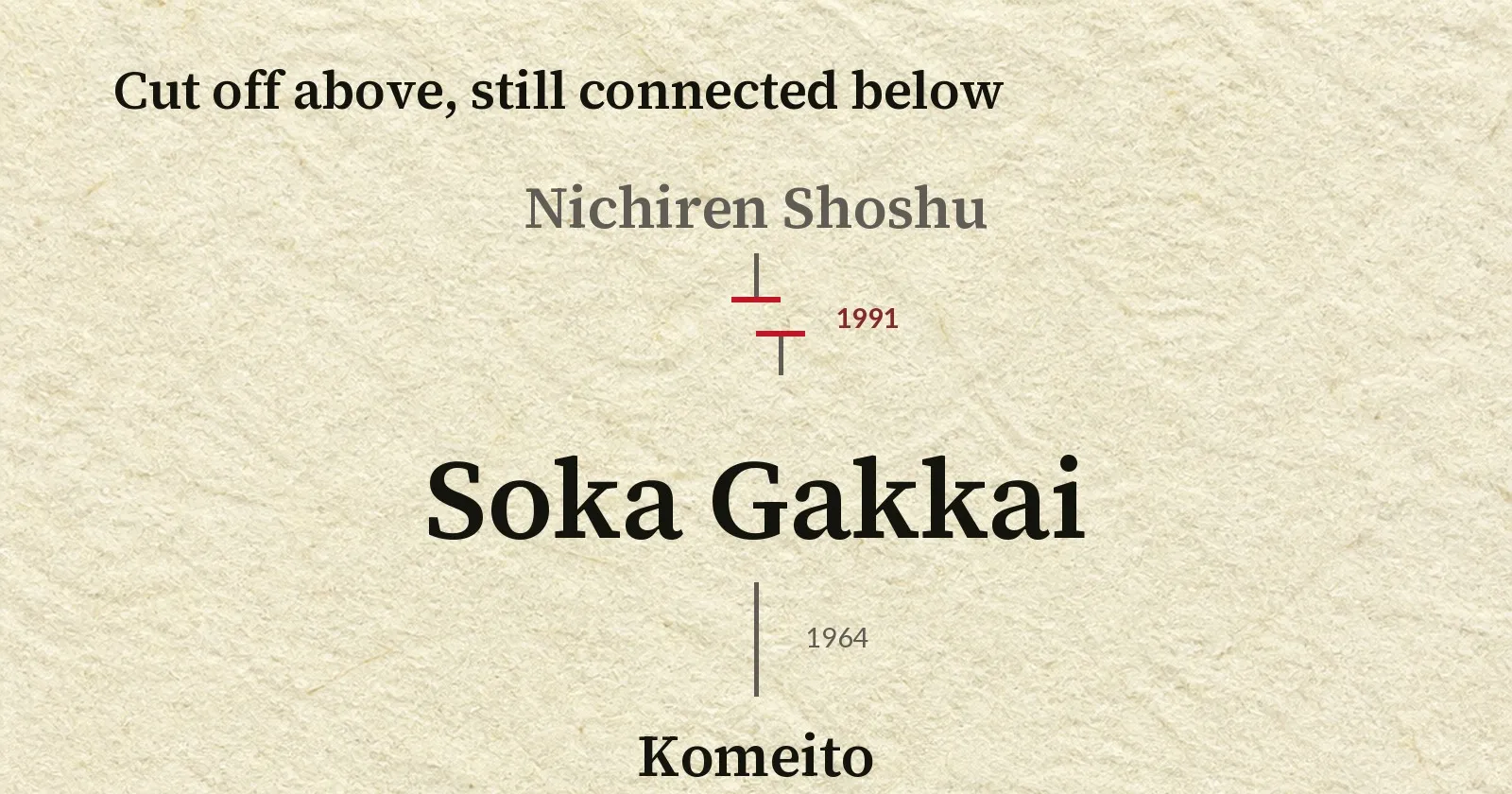
If it means a religious organization with unusual political reach: this is the strongest version of the claim, and it does not require the word cult at all. A religious organization founded a party in 1964. That party governed in coalition for 26 years and left in October 2025. Japanese political journalists still analyze its decisions by asking what the religious organization wanted. None of this is illegal (Article 20 does not prohibit it) but a promise of institutional separation was made publicly in 1970, and whether it was kept is a legitimate and unresolved question.
If it means a group that harms its members: we cannot answer this, and we would distrust anyone who answers it quickly. Allegations exist and are serious. The organization denies them. No court has ordered dissolution. The evidentiary record available to the public does not settle it.
What we would suggest is that the word cult is the least useful tool available for understanding any of this. It compresses a legal question, an institutional question, a political question, and an ethical question into a single syllable, and then invites a yes or no. Every one of those questions has a better answer than the compression allows.
Correction
2 August 2026. This article originally dated the Supreme Court’s ruling on the Unification Church to 23 June 2026. The decision was dated 22 June 2026; 23 June was the day it was reported. The article also attributed the figures of roughly 1,500 people and ¥20.4 billion to findings by a lower court. Those figures come from the government’s dissolution request of October 2023, which is now cited directly, and the passage now distinguishes them from the narrower court-adjudicated total of ¥2.2 billion awarded to 169 people across 32 civil judgments.